Michael Stipe on Lou Reed

Also part of the tribute to Lou Reed in Rolling Stone are twenty or so contributions from various people in music and the arts. The one from Michael Stipe is interesting, pointing out something I wasn’t really aware of:

[Lou Reed] was the first queer icon of the 21st century, 30 years before it even began.

As early as the late 1960s, Lou proclaimed with beautifully confusing candidness a much more 21st-century understanding of a fluid, moving sexuality. He saw beyond – and lived outside – a society locked into a simplistic straight/gay binary division. Through his public persona, his art and music, he boldly refused labels, very publicly mixing things up and providing a “Whoa, that’s possible?” avenue of sexual exploration and identity examination, all with whip-smart nonchalance. He was indefinable, he was other, he was outside of society. He spearheaded a new cool, and he did not care if you “got it” or not. Lots of people did get it…

Coyne and Sheldrake again…

…this time in the pages of the New Republic, in an unfortunate ad hominem attack by the former upon the latter. Here is a sample of Coyne’s invective (note, “woo” is Coyne’s word for non-materialist ideas or perspectives): “went off the rails,” “misbehaving woomeisters,” “thinks himself an unrecognized genius, persecuted like Galileo,” “woo-spouting,” “paranoid,” “rant [what he’s referring to is far more restrained than Coyne’s own intemperance],” “paints himself as a martyr again,” “The Woomeister,” “paranoid rants.”

The occasion for all of this is Sheldrake’s post linked above, which discusses a genuinely problematic phenomenon over at Wikipedia involving that immensely seductive word “objectivity.” The trouble is that scientific materialism itself is a philosophical position that cannot be demonstrated “scientifically,” so to simply assert it as simple Truth and “objectivity” is an exercise in dogmatic intolerance.

As Sheldrake rightly points out, there really is an organization which calls itself “Guerilla Skeptics on Wikipedia (GSoW),” they really are (in Sheldrake’s words) “well trained” and “highly motivated.” They do “have an ideological agenda, and operate in teams, contrary to Wikipedia rules.” Susan Gerbic of said group really does have a training video up, and she indeed “glories in the power that she and her warriors wield.”

Topics which span cultural fault lines are naturally going to result in highly contentious Wikipedia Talk pages, as partisans fight to gain as much control as possible over the presentation of the article in question. We are not talking about an Encyclopedia Britannica article, where one person is asked to write something and a very limited number of editors join in the rest of the way. The “Guerilla Skeptics on Wikipedia” have a declared mission to steer a great many articles – and more as each week goes by – their way, along with sophisticated techniques for doing so. The problem is that they are unaware of any potential blindspots in their thinking. Specifically, I refer to that cultural paradigm of scientific materialism being simply “objective” “Truth.”

There certainly are areas of Sheldrake’s thought which I don’t follow, including “morphic resonance,” one of his central ideas. But there is no doubt that his thinking and work overall are at the very least worthy of engagement and at their best represent important critiques of certain tendencies within Science today.

What is always striking to me in Jerry Coyne’s writing is the ever-present shadow of “religion.” The word appears all the time, even when there is no reason for it to. In this current piece it announces itself twice significantly. Consider the following paragraph:

Many of you might know of Sheldrake. He enjoys a certain popularity in the US and UK among those who think that there must be “something more out there”—with “more” meaning psychic phenomena. I don’t really understand a penchant for things that aren’t supported by evidence, but that’s probably a failure of empathy on my part—as well as a product of my scientific training to doubt. I am sure, though, that some of the same psychological tendencies that promote sympathy for woo also promote sympathy for religion.

This is revealing, I think. First, “something more out there” – more, that is to say, than what is contained in a purely materialist philosophy – becomes effectively reduced to the phrase “psychic phenomena.” What’s wrong with that? Doesn’t Sheldrake believe certain “psychic phenomena” exist? Yes, he does, but nonetheless I would say Coyne’s sentence is misleading. “Psychic phenomena” is a vague phrase encompassing everything from easily mockable fringe beliefs to non-materialist ways of seeing grounded firmly in “evidence-based” practice. Then there is the link between “sympathy for woo” and “sympathy for religion.” What “religion” is he talking about? The word encompasses an extraordinarily vast and varied field of views, ideas, practices. It claims some of the most degraded as well as some of the most realized beings in our human experience.

And then later in his piece he complains about a BBC interview with Sheldrake concerning the Wikipedia war over his own (Sheldrake’s) page, on the grounds that the opposing side wasn’t represented (though he reports the BBC’s intention to do just that sometime this week). At which point there follows this parenthetical remark: “[Note: the BBC interviewer, Dan Damon, describes himself and his wife as ‘keen churchgoers’].” The implication is as clear as can be: a “keen churchgoer” is de facto suspect as an inquirer into this matter of Wikipedia integrity, in a way “The Guerilla Skeptics on Wikipedia,” well, aren’t – at all. They’re simply “objective” defenders of The Truth, of course.

(For anyone who wishes to compare Coyne’s characterization of Sheldrake with the latter himself, I embedded in a previous post his “infamous” TEDx talk here. You may disagree with Sheldrake there to one degree or another but I really don’t think it can be said that Coyne’s constant references to him in this article as “paranoid” and a ranter, as someone who likes to proclaim himself a “persecuted” “genius” and “martyr,” as someone “off the rails,” are demonstrable. This can be said also of several interviews I have heard with Sheldrake.)

Laurie Anderson’s tribute to Lou Reed

It’s as beautiful and inspiring as can be, and it’s here, in Rolling Stone:

But when the doctor said, “That’s it. We have no more options,” the only part of that Lou heard was “options” – he didn’t give up until the last half-hour of his life, when he suddenly accepted it – all at once and completely. We were at home – I’d gotten him out of the hospital a few days before – and even though he was extremely weak, he insisted on going out into the bright morning light.

As meditators, we had prepared for this – how to move the energy up from the belly and into the heart and out through the head. I have never seen an expression as full of wonder as Lou’s as he died. His hands were doing the water-flowing 21-form of tai chi. His eyes were wide open. I was holding in my arms the person I loved the most in the world, and talking to him as he died. His heart stopped. He wasn’t afraid. I had gotten to walk with him to the end of the world. Life – so beautiful, painful and dazzling – does not get better than that. And death? I believe that the purpose of death is the release of love.

At the moment, I have only the greatest happiness and I am so proud of the way he lived and died, of his incredible power and grace.

I’m sure he will come to me in my dreams and will seem to be alive again. And I am suddenly standing here by myself stunned and grateful. How strange, exciting and miraculous that we can change each other so much, love each other so much through our words and music and our real lives.

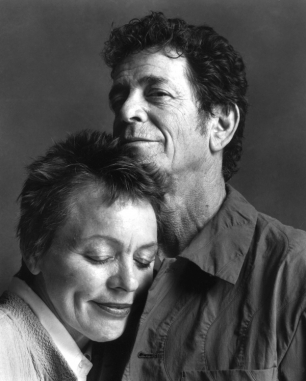
20131105-loureed-x600-1383682618photo credit: Guido Harari/Contrasto/Redux

the Razumovsky quartets

They have been almost the only thing I’ve felt like listening to over the past week or two. My favorite recording is that of the Takács Quartet, who play them (as all the Beethoven quartets) with exquisite balance and such depth of concentration. Just now I have had on the second of the three, which I hear as being almost in two movements, since the Allegro and Molto Adagio are each such monumental conceptions. The third and galloping fourth movements by contrast – which typically take a little less time to play combined than either of the first two alone – feel somewhat like a prolonged coda, an unwinding from the extraordinary intensity of those first 25 minutes or so.

That Allegro has one of the most mysterious openings of any of the quartets, with its dramatic opening chords followed by startling silence, and then the initial motif with its somehow always surprising repetition a half-step up (the Neapolitan degree, which is all over this piece). It is a movement which is full of surprises, in fact, and one which won’t release its grip on you until the final unexpected whisper of that same motif some dozen minutes later. It’s always hard to imagine what could follow, until … the chorale-like opening of the next breathes in a new world, vast as the starry night sky said to have given Beethoven the conception. Which can be found below, in a live performance by the Alban Berg Quartet (there is no YouTube link for the Takács recording, but information about their complete and, as it happens, multiple-award-winning set of Beethoven quartets dating from 2002-2005 can be found here).

The three Rasumovsky quartets date from those miraculous years of 1804-6, the core of Beethoven’s “middle” period, following on from the stupendous “Eroica,” and roughly contemporaneous with Symphonies 4-6, the Waldstein and Appassionata sonatas, the Violin Concerto, and Fidelio. Poorly understood in their day, Beethoven here was writing for the generations to come.

a passage from “Another Country,” by James Baldwin

This is the end of Chapter 1. Rufus Scott, a young black jazz musician, is meandering through Manhattan – from Times Square down to the Village, then by subway up to 125th Street. Revisiting scenes from his life, meeting with some of his friends for the last time. He has given up. Despair has finally beaten him.

…Suddenly he knew that he was never going home anymore.

The train began to move, half-empty now; and with each stop it became lighter; soon the white people who were left looked at him oddly. He felt their stares but he felt far away from them. You took the best. So why not take the rest? He got off at the station named for the bridge built to honor the father of his country.

And walked up the steps, into the streets, which were empty. Tall apartment buildings, lightless, loomed against the dark sky and seemed to be watching him, seemed to be pressing down on him. The bridge was nearly over his head, intolerably high; but he did not yet see the water. He felt it, he smelled it. He thought how he had never before understood how an animal could smell water. But it was over there, past the highway, where he could see the speeding cars.

Then he stood on the bridge, looking over, looking down. Now the lights of the cars on the highway seemed to be writing an endless message, writing with awful speed in a fine, unreadable script. There were muted lights on the Jersey shore and here and there a neon flame advertising something somebody had for sale. He began to walk slowly to the center of the bridge, observing that, from this height, the city which had been so dark as he walked through it seemed to be on fire.

He stood at the center of the bridge and it was freezing cold. He raised his eyes to heaven. He thought, You bastard, you motherfucking bastard. Ain’t I your baby, too? He began to cry. Something in Rufus which could not break shook him like a rag doll and splashed salt water all over his face and filled his throat and his nostrils with anguish. He knew the pain would never stop. He could never go down into the city again. He dropped his head as though someone had struck him and looked down at the water. It was cold and the water would be cold.

He was black and the water was black.

He lifted himself by his hands on the rail, lifted himself as high as he could, and leaned far out. The wind tore at him, at his head and shoulders, while something in him screamed, Why? Why? He thought of Eric. His straining arms threatened to break. I can’t make it this way. He thought of Ida. He whispered, I’m sorry, Leona, and then the wind took him, he felt himself going over, head down, the wind, the stars, the lights, the water, all rolled together, all right. He felt a shoe fly off behind him, there was nothing around him, only the wind, all right, you motherfucking Godalmighty bastard, I’m coming to you.

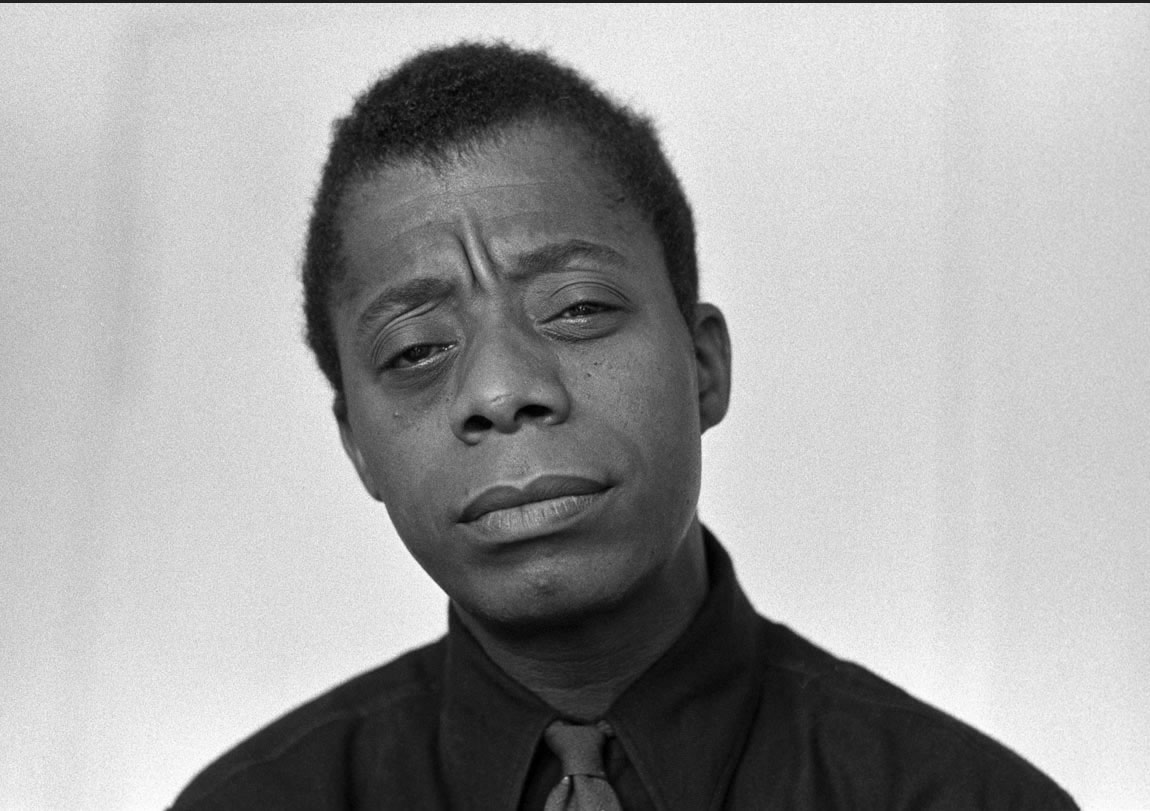
thinking of James Baldwin tonight

tumblr_m84or1rlm61qh021co1_1280
Baldwin17©2012 Mark B. Anstendig

Growing up, I read his book of two longer pieces on race in America, The Fire Next Time, and then the novel Another Country. I was seized by his intelligence, integrity, and passion. The essays sizzled and sparked with the energy of prophetic rage; the novel was unlike anything I’d ever read. I went on to appreciate other essays and other novels – Another Country remains my favorite of the latter.

He will pop into my head when I find myself contemplating the display of moral courage in tumultuous times. No one in the ’60s was more eloquent on the subject of racialism in the US, yet his open bisexuality also exposed him to attack by black political allies – the Panthers of course being famously as unsupportive of alternative masculinities as of feminism.

Searching for photos of him to add to this post I came across an interesting interview with the photographer Sedat Pakay who was a close friend of Baldwin’s in the ’60s. Pakay had met him in Turkey just out of high school (Baldwin spent a lot of time abroad, especially in Istanbul and France). There are a few of Pakay’s photos of Baldwin in Turkey there, and a lot more here.

Having begun publishing in the mid-’50s, by the mid-’60s Baldwin had become a famous public literary and activist figure, in constant demand as speaker and debater – one of the reasons for his frequent sojourns in Europe was simply to enable him to write sustainedly. It’s still startling to realize that Another Country, with its panoply of biracial and bisexual relationships, was published in 1962.

Today his reputation remains strong and there are continual appreciations of him, for example a lovely recent one in the New York Review of Books by Darryl Pinckney (whose partner is the English poet James Fenton, great friend of the late Christopher Hitchens). At the same time he seems rather less well-known today than ten or fifteen years ago – hence this modest mini-appreciation of my own.

BaldwinInIstanbul

BaldwinOutsideTurkishSodaShop

1964PortraitOfBaldwinThese three photos copyright Sedat Pakay.

Pinker and Wieseltier’s discussion on science and the humanities

There have been several exchanges recently between Steven Pinker and Leon Wieseltier in the pages of the New Republic regarding the relationship between science and the humanities. Yesterday (September 26), there appeared this set of responses, which is well worth reading carefully and contemplating. The essay of Wieseltier’s which immediately led to this is here. It too is eminently worth reading. In fact, I consider the latter to be about as lucid, incisive, and elegant a statement as I’ve seen on the subject.

Wieseltier has become a beacon of brilliant sanity in this matter of the domain and role and limitations of Science, and the irreducible centrality of the humanities to human culture.

More about this particular exchange another time.

a response to Sean Carroll concerning scientism (1)

Sean Carroll, a physicist at Caltech, recently posted a piece entitled “Let’s Stop Using the Word ‘Scientism.'” His basic argument – which is the same as Jerry Coyne’s and others – is that the word is vague. Like Coyne, he wants us to cease using it, entirely replacing it with criticisms of specific scientific claims or practices, as they come up. Let’s take a closer look at this.

If we are not permitted to use a word like “scientism,” then we are not permitted to voice the idea that the word “science” is capable of ever masking any significant degree of self-deception. We are instead required to view it as possessing some sort of transcendental status that somehow bypasses human mediation. In other words, “Science” must be viewed as simply “The Truth,” a universal epistemological trump card, and basically incorruptible.

(I capitalize the word here, and in certain other instances, when I specifically wish to emphasize the notion of science as an entire “way of seeing,” distinct from either doctrinally religious views on the one hand, or those more broadly humanistic, on the other.)

Since that is so, this argument goes, the notions of dogmatism, extremism, ideology, and religious “fundamentalism” have no parallel in Science as a whole. The paradigms and practices of science require no overarching philosophical View – which would, of course, need to be supplied by humans, and would therefore be fallible. Nor is science capable of radically straying into any kind of cul-de-sac of error. Therefore, it’s unnecessary and even obfuscating to have a word for this danger. The danger doesn’t exist.

That is the argument. In support of it, Sean provides nine examples of how the word “scientism” is used in one instance or another, claiming that these taken together represent a vagueness or lack of specificity. They are worth reproducing:

1) Science is the source of all interesting, reliable facts about the world.
2) Philosophy and morality and aesthetics should be subsumed under the rubric of science.
3) Science can provide an objective grounding for judgments previously thought to be subjective.
4) Humanities and the arts would be improved by taking a more scientific attitude.
5) The progress of science is an unalloyed good for the world.
6) All forms of rational thinking are essentially science.
7) Eventually we will understand the important questions of human life on a scientific basis.
8) Reductionism is the best basis for complete understanding of complicated systems.
9) There is no supernatural realm, only the natural world that science can investigate.

Now, is Sean implying that all definitions must be reducible to a single thought, a single sentence? If not, I do not understand his point. Six of these nine statements (points 2-7) all go together, forming, indeed, a philosophical perspective that can most certainly be disputed.

First, let me isolate the three that do not seem fairly placed. I would question Sean’s ability to find more than a few scientists, if any, who would assert that “science is the source of all interesting … facts about the world” (point 1). Maybe such people exist somewhere, but they would be rare. His second adjective “reliable” is maybe a little more in line with the other points, but “interesting” is too vague, I think.

Point 9 contains words difficult to define for these purposes (“natural” and “supernatural”). It is presumably in the list because a segment of people who attack science do so from the perspective of religion, often religious fundamentalism. However, it’s not actually relevant here: notions of what is “natural” or not do obfuscate the question. There are more than enough of us deeply concerned about scientism who don’t make use of a concept of the “natural” in doing so.

And finally point 8 is rarely heard: few people will actually assent to being a reductionist. Certainly reductionism manifests as part of the larger syndrome being referred to by scientism, but the mantle of reductionism is not commonly claimed by scientists.

This leaves points 2-7, which very much do all cohere. A given individual might slightly downplay one or the other, as indeed Sean states. But in practice these can be discussed together as indicating a basic view of reality and valuation of human endeavor (and they can all be easily found in for example Jerry Coyne’s writings). Here’s one way of doing it, with only a few additions for linking purposes (the original points are in bold):

All forms of rational thinking are essentially science. Since rational thinking is our only means for getting at the truth of phenomena, the progress of science is an unalloyed good for the world. For the same reason, the humanities and the arts would be improved by taking a more scientific attitude, while philosophy and morality and aesthetics – again following on from the equation of rational thinking and science – should be subsumed under the rubric of science. Being founded and practiced upon rational bases, science can provide an objective grounding for judgments previously thought to be subjective. And when the humanities and arts (along with “philosophy and morality and aesthetics”), as above, are placed upon firm scientific ground, eventually we will understand the important questions of human life on a scientific basis.”

Even though I took more-or-less the entire core of the previous paragraph verbatim from Sean’s own points 2-7 rather than formulating it in my own words, it forms a definition of scientism that isn’t half bad, I would say. In a second post I will try to show the blindspot in this view, and some of the ways in which it is very dangerous.

guess the movie – answer beneath the still

Click to enlarge. (If you’ve seen the movie you will probably get it.)
cymbals, eventually

Correct: it’s from Alfred Hitchcock’s The Man Who Knew Too Much (the 1956 version). Not one of the great Hitch films, but it has its moments. I like the beginning of the scene in Ambrose Chapel, ie the congregants singing what is surely the most dreadful hymn ever written – a minor-keyed dirge vacantly rendered with all the gusto Calvinist life-hatred can summon, in a church completely devoid of color, furnishings, display. Knowing Hitchcock, surely staged for humor? Either way, it made me laugh.

As for that terribly exciting cymbals part you see – yes, something is destined to happen in that final bar…

the power of simple gestures

A week or so ago I returned to my car in the parking garage downtown to find a little yellow flower tucked in behind the windshield wipers. Startled, I glanced up the rows on each side to see if other cars had been recipients. None had, so my first assumption was that someone I knew had made the gift. But then I realized that currently almost no one would recognize my newishly-purchased car, either by exact model or certainly by license plate number, and the one person who might – namely my landlord, who lives upstairs – is not someone I can imagine doing a thing like that.

So I’m left with a mystery. My car was parked that day at the end of a row, adjacent to the path along which people walk to get from one of the streets bordering the garage to the other. It makes sense then that someone picked the flower somewhere, maybe from just outside the entrance where there’s a little garden, then had the spontaneous idea to offer it to the first car they saw – which would’ve been mine.

In any case, I was truly touched by the gesture, and all the more because it came from someone who didn’t know who I was. So much of the time we find ourselves interpreting events as gratuitous negative judgments upon us – well, or at least I do… Here suddenly, out of the blue, was a gift from the universe – precisely because neither giver nor receiver knew the other. There was something so free, irreducible, and pure about it.

When I returned home I put the flower in a glass of water and set it on my desk, where it thrived for nearly a week. And every time it caught my eye it made me smile.

These little actions of the heart really matter in the world and we should all do them more often! I bow to the person who performed this one, whoever and wherever you are…
big-yellow-flower-1u-1(image courtesy of http://www.hiren.info)

George Saunders on kindness

As spotted on The Dish today, George Saunders delivered the commencement address at Syracuse University on May 11 of this year (the entirety can be read here). It’s an ode to kindness, and begins with a recitation of various unpleasant experiences he has had and doesn’t particularly regret, followed by the one thing he does:

So here’s something I know to be true, although it’s a little corny, and I don’t quite know what to do with it:

What I regret most in my life are failures of kindness.

Those moments when another human being was there, in front of me, suffering, and I responded… sensibly. Reservedly. Mildly.

Here is his conclusion, which is about as good a commencement speech ending as I expect I will ever see:

So, quick, end-of-speech advice: Since, according to me, your life is going to be a gradual process of becoming kinder and more loving: Hurry up. Speed it along. Start right now. There’s a confusion in each of us, a sickness, really: selfishness. But there’s also a cure. So be a good and proactive and even somewhat desperate patient on your own behalf – seek out the most efficacious anti-selfishness medicines, energetically, for the rest of your life.

Do all the other things, the ambitious things – travel, get rich, get famous, innovate, lead, fall in love, make and lose fortunes, swim naked in wild jungle rivers (after first having it tested for monkey poop) – but as you do, to the extent that you can, err in the direction of kindness. Do those things that incline you toward the big questions, and avoid the things that would reduce you and make you trivial. That luminous part of you that exists beyond personality – your soul, if you will – is as bright and shining as any that has ever been. Bright as Shakespeare’s, bright as Gandhi’s, bright as Mother Theresa’s. Clear away everything that keeps you separate from this secret luminous place. Believe it exists, come to know it better, nurture it, share its fruits tirelessly.

And someday, in 80 years, when you’re 100, and I’m 134, and we’re both so kind and loving we’re nearly unbearable, drop me a line, let me know how your life has been. I hope you will say: It has been so wonderful.

Congratulations, Class of 2013.

I wish you great happiness, all the luck in the world, and a beautiful summer.

“please stop fightin’ … please, stop … please”

I’ve never been able to figure out why U2 has acquired the degree of “uncool” status it has. Maybe it’s the legacy of the early few albums, which I haven’t connected with. But gradually, beginning with the Brian Eno and Daniel Lanois-produced The Unforgettable Fire and The Joshua Tree, and especially the ’90s electronica-and-dance-influenced Achtung Baby (Eno and Lanois again) and Zooropa (Eno, Flood, and The Edge), they have created some great songs – a few of them masterpieces – that are holding their own. And I can’t think of another band that’s stayed together for over 30 years and continued to grow musically to the extent they have, either.

One of their very, very best is “Please,” from Pop, the album that followed Zooropa. It is in part about The Troubles of Northern Ireland, and never fails to totally nail me… The extraordinary video (below) was directed by Anton Corbijn.

And here is the official live video, recorded in Rotterdam, musically even more immaculate than the studio version…

whirlwind tour of European architecture by night

After watching Daniel Dennett confidently tell me the “True Purpose” of humor, and reading some of his fundamentalist defenders, I was thoroughly depressed. Fortunately, I later came across the video embedded below, which in itself is a magnificent – and appropriately wordless – response to the shabby grey reductionist religion of “evolutionary psychology” (more on that particular talk in another post).

The video is a brief, breathtaking tour of European architecture in 28 buildings, made by Luke Shepard over the course of a three-month trip. A list of them is here, on Luke’s website. On the same page you can find a map with all of these buildings located.

America’s culture of fear – in a photo (3rd and last)

I’ve been discussing (here and here) a very destructive syndrome that continues to unfold in our culture. As each decade and perhaps even year goes by, we find ourselves becoming more and more the slave of fear. Of both individual fears – which steadily multiply – and fear itself, fear as a way of life. By now I don’t think we even realize how far down the road we have travelled, but increasingly simply take it all for granted.

Fear has a thoroughly crippling effect upon freedom of thought and activity. It distorts reality by forcing it through its own unacknowledged filters. Of course, when a particular manifestation of fear is sufficiently powerful it achieves the status of taboo. At that point, we can no longer rely on a straightforward rational approach to relating to it. Instead, we find ourselves needing protection from the protection, as it were – ie, since creating any kind of rational protection requires looking into the fear, and we’re unable to do this, we need an additional layer for distance. But sometimes even that isn’t enough, and we end up with a whole construct, each layer distorting the actual nature of things more and more, stifling more and more human autonomy.

The recent revelations about Orwellian NSA activity are one prominent demonstration of this, but the syndrome is endemic now. It can be seen perhaps at its most expansive and fully hysterical in the realm of sex and relationship more generally, but that requires its own series of posts at another time. For now, I decided to focus on a simpler, more compact topic to illustrate the dynamic, namely our laws regarding the purchase and consumption of alcohol (please see previous posts).

Here is the next layer we’ve created – and this is where it gets rather interesting. Again, we’ve already raised the age, nationally, at which we might purchase even so much as a glass of beer, to five years beyond the age at which we are allowed to drive a car. And we are one of the very few countries in the world with a drinking age so high (the vast majority have set 18). One would have thought it sufficient then, with such a high age to begin with, that enforcement involve a straightforward assessment of whether or not a prospective purchaser of alcohol indeed seems to be at least 21.

In other words: a liquor store employee simply has a look at the person who has next approached the counter (while warmly greeting them, it goes without saying…), and if it appears as though they might be under 21, she/he requests proof of age. Easy, right?

Well, it doesn’t appear so. Because we seem to have lost any discretion here whatsoever. Someone who looks 21 might actually be a mere 20, or 19, or at a pinch 18 even! And how dare such a person, who is trusted with driving an extremely dangerous vehicle, trusted to marry and raise children, trusted with the ability to vote for their political representatives, trusted with the option of joining the military of their country where they might have to make genuine life-and-death decisions, and as it happens trusted in virtually every other country of the world to decide what they would like to drink – how dare somebody so terribly young conceive of buying an alcoholic beverage! Now if only they were a mere day over 21, all would be fine. But a day under? Better that all possible danger of mistake be eliminated than that one … single … person under that literally magical number ever succeed in … purchasing a couple of beers.

So here’s what we now do: in virtually every store I’ve been to that sells alcohol, there is a house policy – often posted – of requiring anyone who appears as if they might not be over 30 to prove their age. Now think about what this is really saying for a moment. An employee of a liquor store takes a look at someone and thinks: “ah, that person’s definitely old enough to drink, he looks 30, 32 or something.”

But then they stop and ponder: “although, come to think of it, they might actually be more like 29, or even 27. And in fact, despite their looks, it’s at least conceivable that they might be 24, 23.” So, because the employee’s best guess is 30 or 32, that’s not good enough, because that person might just – one time in 50 or so – be ten or twelve years off.

And if they’re wrong, that one person in however many might just be someone who not only drinks that night but also drinks to impairment and then drives a car. Forget about the inconvenient fact that the next person in line, a completely acceptable 22, might well do the same thing of course. No, all we care about is that absolutely nobody, at no time and in no place, noways and never, who is a single day under the magic Number, ever evades that almighty number and gets to … buy a drink.

Again, I can’t even be sure I’m being understood here because we have gone so far down this particular road. But in any event now let’s continue even further down this path of reductio ad absurdum. I would argue we’ve already reached it with such a policy, but clearly even this isn’t good enough, because in a large number of stores which sell alcohol I have seen signs which state that anyone appearing to be under 40 will be asked to prove their age. Forty! Is there, honestly, a single human being in this country who genuinely appears to be 38 or 39 but is actually 19 or 20? A single one? Well, who knows, just maybe there are one or two, but…

So we can see what has happened. The penalties against having served a “minor” are so crippling to a small business that they have decided all discretion has to go out the window, and we are left with a hysterical policy that has left all common sense behind. Again, remember, the law itself is only indirectly connected to drunk driving in the first place. Drunk driving requires three components: alcohol, enough alcohol to cause impairment, and then the act of driving. The original law was passed to reduce a percentage of a percentage. A certain percentage of all people will combine those three components – and we can’t do anything about it if someone decides to do so. So we simply raise the drinking age as a measure far more politically acceptable than raising the driving age.

Finally, three times now I have come across 50 given as the arbitrary cutoff point – as per my photo in the previous two posts. And you know what? If there actually does exist a single human being in this country who appears to be just barely under 50 but is in fact 19 or 20 … then please give that person a drink! Just do it, on the house, absolutely! Because clearly they’ve been through way, way too much…

America’s culture of fear – in a photo (2)

In the previous post I suggested that the capacity to be at least a little bit curious about an object of fear is essential to maintaining our humanity. Fear has a ravenous nature; if unchecked it simply keeps expanding. Over time multiple layers of protection can solidify around a core fear, like the concentric circles of an onion. We can’t even name the fear itself at that point, can’t even access it. But each of those additional layers cuts us off more and more from reality and creates various kinds of scapegoats we are unable to acknowledge. Each increasingly distorts our perception and diminishes our personal autonomy. It’s not hard to see that this syndrome has now pervaded our entire culture.

America’s current approach to alcohol is a straightforward illustration of this, and I’d like in this post to try and identify the core fear or fears – the center of the onion – lying behind it. In the following post on this subject I will then build up the onion, as it were, showing how we get from the core fear … to this (a photo I took last summer at a convenience store in upstate New York):

sign

So, what is behind our de facto national prohibition of alcohol to those under the age of 21? (Note: with the exception of those Muslim countries in which alcohol is entirely illegal, only a handful of countries in the world have a drinking age above 18. Some have set 16, a number of others don’t legislate on the basis of age at all. So, we are in the draconian bottom 5-10%.) Our first thought is likely to be: the desire to reduce incidences of injury and death resulting from drunk driving. After all, this was the stated aim of MADD (Mothers Against Drunk Driving) at its founding in 1980 by Candace Lightner, who had lost her young daughter in this way.

With the help of then-Senator Frank Lautenberg (D, New Jersey), MADD succeeded in getting the National Minimum Drinking Age Act passed in 1984, which, through financial pressure on the states, resulted in every state raising their drinking age to 21 by 1988. Since then, having achieved its objective, the organization has gone on to lobby for further toughening of existing laws and additional measures, most controversially the creation of frequent sobriety checkpoints on roads and the raising of excise taxes on beer to match that on spirits. (Candace Lightner herself moved away from the organization in the mid-’80s, stating in a Washington Times article from 2002: “”It has become far more neo-prohibitionist than I had ever wanted or envisioned… I didn’t start MADD to deal with alcohol. I started MADD to deal with the issue of drunk driving.”)

We need to take a step back at this point and look more closely at what is going on. What are the components of the problem as such? There are three, and they are inseparable: alcohol, drinking too much, and driving. If any of these three are absent, we don’t have drunk driving, period. Notice also that age as such is irrelevant here. When a person of whatever age a) drinks alcohol, b) drinks to the point of impairment, and c) gets behind the wheel of a car, then and only then do you have a situation of risk.

(It’s important also to note that what constitutes “too much” does in fact vary from person to person, day to day, and even hour to hour, especially at lower levels of consumption. But in a scientistic culture where, more and more, mind is being collapsed into brain, these kinds of empirical truths increasingly can no longer be seen. All that matters is whatever magic number is called into service. It’s also crucial to remember that “impairment” occurs in lots of other ways too, via any form of inattention, whether it be texting, taking too long to change the radio station, turning to stare at a beautiful guy/girl, tiredness, or whatever it might be. Any of these scenarios can and do cause accidents, and most in the long run are simply impervious to legislation.)

So: why not just maintain a law against, well … drunk driving, and leave it at that? This is the entire point, after all.

The argument given is that raising the drinking age can be correlated with fewer incidences of drunk driving, and this can’t help but be true. (Much of the decrease surely also can be correlated with greater public exposure of the problem.) But if this is our logic, then why stop at 21? Raising the drinking age to 25 would save even more lives. Going back to Prohibition – even more. And in fact, of the three necessary components to drunk driving I pointed to above, driving is actually the most proximate cause of all, because it’s the vehicle which directly brings about the harm. So why not simply raise the driving age to 21, which would bring about all sorts of additional benefits?

And it is this last option I think which points to what is going on at a deeper level here. Even though raising the driving age to 21 would be even more effective at reducing car-related deaths than raising the drinking age, no one would dream of seriously suggesting it. And why not? Because despite the fact that car accidents are one of our leading causes of death, and have brought about all kinds of other negative environmental, social, and health effects, greater mobility is seen as a pure, innocent, necessary good. Intoxication of any kind, however, the heightening of ordinary, functional consciousness? Suspicious, always, in this culture. Especially in “the young.”

And let’s go one step further. Why is heightened or altered consciousness suspect? Simply because it moves in the direction of the previously unknown and the less certain. It threatens inertia, the purely habitual. It is a catalyst of new perceptions, can enable new ways of seeing.

Therefore we have a driving age of 16 and a drinking age of 21. And this says it all. At 16 we are deemed responsible enough to operate an extremely powerful and dangerous machine, but not responsible enough to have a beer or glass of wine – or, heaven forbid, sometimes several!

I don’t want to diminish the power of alcohol either. As we know it plays a part in a high percentage of instances of violence in our culture, and there will always be a relatively small minority for whom it will become a very destructive problem. But it seems that when it comes to the realms of bodily enjoyment and mental expansiveness we have lost all sense of balance. This feature of our core collective fear is so deeply buried that automatic suspicion has become the norm. We really don’t trust ourselves to navigate our own bodies and minds, so we relinquish responsibility to an abstraction called the law, which removes more and more of our individual discretion.

I’m leaving aside the question of enforceability here, though it’s not insignificant. An 18-year-old leaving home for the first time to enter a university environment where they will be surrounded by hundreds or thousands of other students their age is going to drink if they want to, regardless of the law. Any college student can testify that such a prohibition is easily, regularly, and almost universally flouted.

Mainly what I’m trying to show at this first level of response is that it is a purely pragmatic measure that has been elevated to moral crisis. Our culture treats this number as a moral principle in itself, as witnessed for example by the portentous – and infantilizing – tones of any number of public service advertisements on the subject over the years. Someone a single day over that magic number of 21 can purchase and drink as much alcohol as they like; someone who is younger by a mere two days is treated as having a “criminal mind” if they attempt to do the same. Many 16-year-olds are perfectly capable of drinking responsibly; many who are 26, or 36, or 56 are not.

A number will never make for a moral argument. Our culture worships numbers, however, partly because we don’t trust ourselves to make intelligent discretionary decisions, partly because we have come as a society to value safety and risk-aversion above almost everything else. So: more and more and more laws aiming to create a perfectly safe world which … can never come. Hence – as I’ll touch upon in the third and last post – a process that is hysterically out of control.

America’s culture of fear – in a photo (1)

sign

I took this photo last summer. The sign appears in the window of a service station/convenience store in upstate New York and provides, I think, an especially compact illustration of an entire story that can be told about our collective psyche these days.

Before telling it in my next post, a few words as introduction:

It’s not hard to see that fears have a kind of self-propagating or self-aggrandizing power. They are ravenous, ever-expanding, until we can begin to examine them. This is so because fear designates precisely that which is beyond the pale, unencounterable, for what cannot be faced becomes to that extent inescapable. Ordinarily we see this most clearly in nightmares, when we are at the mercy of our mind’s projections. Within the nightmare we are bodiless and so running away doesn’t – can’t – succeed: we are attempting, impossibly, to flee ourselves.

The Tibetan lama Chögyam Trungpa taught that becoming a “warrior” (in the sense of a spiritual warrior) does not mean being free of fear or cultivating a tough exterior. Rather, it arises out of a very different quality, which is the capacity to open fully to the world, to allow the world with all its phenomena in, so that we can actually be touched by it. He suggested that when we do so its effect is to soften us, and that out of this “tender heart of sadness,” as he called it, our long-cultivated dualities of Self and Other can begin to soften too. The Berlin Walls in our minds become more permeable.

A glimpse of genuine fearlessness can arise out of this experience because in that moment we are not trying to protect ourselves and our territory in quite the same way. Ultimately, we fear anything which threatens our belief in a separate, independent, unchanging Self. It naturally follows that allowing our habitual defences to soften, “letting the world tickle our raw and beautiful heart,” as Trungpa so wonderfully put it, fosters the birth of true warriorship.

(From this standpoint an American president once said something truly profound – who’d have thought?!: “the only thing we have to fear is … fear itself.”)

Returning to nightmares in this context, I’ve been told by more than one person that if, when confronted by a monster in a dream, we can stay with it, face it, ideally even take a step in its direction, it will lose its power over us, even dissolve or turn into a harmless- or sad-looking cartoon character. Best of all is when the dreamer is able to feel a sense of compassion towards it.

So then, what happens when we do the opposite, when instead of trying to take a step forward, even a tiny one, or at least not running away, we … slowly back up, in rising panic. Or just turn round and run for the hills. Does the fear go away?

Well, how can it? We’ve only shored it up, made it even more solid. From this standpoint “fear itself” is nothing other than the duality we continuously strengthen. It resides in and arises from precisely that ultimately non-existent gap between self and projection. But the more powerful we allow it to become, the more layers of protection we will find ourselves creating. The whole thing becomes tighter and tighter. And more and more demons have to be invented too – scapegoats we sacrifice to keep the nature of reality at bay.

A metaphor that comes to me often in thinking about this is that of an onion. If the core of the onion represents a fear we cannot even look at, we create a layer around it as opaque as possible. But if for various reasons the fear is so strong that one layer isn’t enough, we add a second – we put something in place which protects us from our initial barrier that we realize is not 100% strong enough. And then sometimes we need a third layer if we sense the second itself may be a bit fragile. So that when something becomes so taboo that we are incapable of looking at it at all, incapable of any kind of reasoned response, the end result is hysteria – and loss of humanity.

In the next two posts I try and deconstruct, fairly thoroughly, the quite numerous layers of that onion of fear which are embedded in the photo above. And suggest that in America today this approach has become our routine, automatic, indeed pathological response to insecurity and uncertainty of all kinds.

the blindspots in our religion of Scientism

There are many. Here are some of the most important:

1) Science is viewed as uniquely trustworthy because it contains a continuously self-correcting mechanism in the form of peer review.

2) For this reason, it constantly evolves over time, getting better and truer in every way. Unlike religion, science is incapable of succumbing to dogmatic stagnation and therefore remains incorruptible.

3) Its practitioners maintain a more-or-less pristine purity – of motivation and integrity, intellectual and moral courage.

4) Even where this is not so, Science’s methods are somehow transcendently “objective,” ultimately enabling it to rise above all human partiality and short-sightedness.

In short, we can confidently cede to Science the same kind of trust and faith we once gave to religion. We may as well even (were it not for the fact that we dislike the word so much) call it “God,” because it serves the same primary function for us, being our source of complete and absolute Truth.

When challenged, apologists for scientism – which is not the practice of genuine, humble science but rather precisely this ideology or religion of Science – can be counted upon to deliver these assertions. Mostly, however, they don’t need to, because these have become thoroughly embedded in our culture. The trouble – the big trouble – is that none of them happen to be true.

Taking them one by one, briefly:

1) Peer review is still trustworthy within certain domains of science. Unfortunately, in other areas – particulary medicine and psychiatry – this process has clearly broken down, as has been demonstrated in many publications of recent years. Big, big money and other vested interests infiltrated it quite some time ago. Pharmaceutical companies maintain various means for influencing the interpretation and reception, even the initial framing and design, of studies. (See an earlier post on this.)

2) The idea that science, a purely human enterprise, must necessarily keep getting better is an impulse of religious faith, and nothing more. We laugh today at nineteenth century science’s forays into phrenology: how could they ever have believed that the shape of one’s skull could indicate “moral degeneracy” or “criminality”? Yet today we see research positing a connection between finger-length ratios or inner ear functioning and openness to same-sex sexual expression! All of these kinds of studies have been picked to shreds by numerous analysts, but they still persist and are even widely believed because … science keeps getting better and better, doesn’t it?

But, of course, this is simply not so. There are wrong turnings, and dead ends. There is wishful thinking, and the need for new paradigms. There are simply no guarantees that at any given moment in any particular area of inquiry we are on track. There is even, and very much so, the possibility that dogma may set in, so that an entire erroneous way of conceiving something becomes stuck in falsehood or incoherence for quite a long period.

3) Once upon a time, “the scientist” represented an ideal type. She (though in fact almost always a he, since science until a hundred years ago or so believed women to be unfit for higher education and in fact damaged by it) was a lone, heroic seeker after truth, wherever it might lead. Humble, radically open, laboring away with purest and most disinterested motivation.

Those days, needless to say, are long gone. Though such people undoubtedly still exist, “science” today is a vast domain of disparate activities, many of which are indistinguishable from pure advocacy or profit-making. The reality is that enormous profits may hang upon the acceptance of one study or another, and that big contracts await those who can persude governments or corporations of future cash potential in a line of research. There is more generally the reality of job-seeking and grant application at all levels, and the all-too-human phenomena of ambition and peer pressure, of competitiveness and factions within research institutions.

Some human beings may be saintly, purely disinterested seekers after truth wherever it may lead them. Most of us would prefer, ideally, to have more influence rather than less, to be revered rather than viewed as an eccentric crank, and so on. On top of this, larger cultural paradigms and expectations inevitably influence how we conceive the “scientific” to begin with. By definition, we cannot see a cultural blindspot until something shifts in the paradigm, revealing what was previously obscured.

4) The notion that Science is somehow separable from the human minds which create, define, and practice it is completely insupportable. This is precisely a transcendent, religious notion – an article of faith.

Materialism – the belief that all that exists is measurable, perceptible to the physical senses of human beings – is inescapably a philosophical, not a scientific, position. It contains a number of difficulties which the best minds of countless generations have grappled with. Indeed, there is something rather comical in the spectacle of human minds getting together to express the idea – no, make the dogmatic assertion – sometimes even in formulations of dense theoretical abstraction, that consciousness as such doesn’t exist! That everything mental is somehow generated from the physical. (The buddhists put it the other way round – but they also don’t claim this as dogma to be believed, rather a way to see which we can each personally investigate.) The fact that the material realm does obey certain formulable rules does not warrant an assertion that we can reduce the nature of reality itself to concept.

“We are nothing but the firing of neurons,” say – somehow – the firing neurons…

All interpretation is necessarily subjective, unless, in the seizing of “objectivity,” we want to proclaim Science as dogmatic religion, as our God: indisputably true, the final arbiter in all and every last meaningful question we might put to it. Not just – for here is the most crucial point – within the sphere of non-sentient matter, but also that of sentience, consciousness, itself.

Look at what happens, after all, whenever the arguments I have made above appear in the national press – when they are even allowed to appear. One is told that as a non-scientist one has no right even to speak on the subject, being so ignorant. Science also commandeers all purity of motivation today; all those who lament the extent of its dominance must be, maybe even secretly, employees or spies of Religion. (The only trouble is that when science PhDs say the same things they too are intimidated or mocked.)

We are told:

Sit down, shut up, and marvel – with genuine religious awe even – at the photos we are going to show you of galaxies and the brain (but wait until we first color them in so that they look as startling and aesthetically pleasing as possible, otherwise, actually, you might be rather unimpressed).

We are told:

Do you see that beautiful orange region right there? That, my friends, is “gregariousness”! And that breathtaking purple underneath it? Hold onto your seats, but, yes, that’s the region which, when activated, causes you to weep with joy when listening to Ravel’s Piano Trio or petting a faithful dog! And one day we will be able to locate the exact region where “addiction-proneness” resides, so that – with enough funding – we can develop forms of surgery which will ensure a population where nobody is addicted to anything! Of course, it’s true, the purple area might also light up when you get some unexpected good news, or in numerous other scenarios, and in fact other regions light up too when you pet that dog, and admittedly we can’t actually conceptually bridge material and immaterial yet – um, at all – but give us more time, and tons more money, and we promise we will eventually be able to tell you how you get from a neuron firing to all the immense richness and complexity of aesthetic experiences and human emotions of all kinds.

You can trust us, for we are the representatives of the living twenty-first century God Who has dethroned wisdom as wimpy new-age ‘woo’ in favor of endless, directionless, value-free accumulation of knowledge. We ourselves, of course, are as wooless as woolessness can be. [Note: “woo” is a technical term used by, eg, Jerry Coyne and his fellow warriors devoted to the death of all religion. It means, as far as I can tell, anything enthusiastically stated using a language other than science, especially if it contains sentiments of awe, mystery, amazement.]

It has all become rather a racket. Good research being done, certainly, mixed in with much that is very badly conceived. Everyone scrambling for money, with fame and honor to be gained if something either pans out or can be made to appear promising. An entire culture desperate to believe in something, desperate for certainty – now that most within it can no longer subscribe to religious dogmatism. Corporations, naturally, ever on the lookout for a technological innovation that will give them an edge. Governments, naturally, searching for more successful means of manipulation, control, power. A public with miniscule attention spans and an insatiable desire for “news,” for non-challenging, easily digestible reductionism, the more sensational the better – turning to the media and its nearly uncritical acceptance of anything that comes out of the mouths of our contemporary priests and bishops – the Scientists.

Wisdom? What’s that? Just a certain quantity of “knowledge,” right? Quaint term, but what does a wise person have to give us anymore, anyway? Now if you’ll just read this new study over here, scientists have discovered (sort of, not quite, well not actually at all, but if you read the fine print they have possibly contributed to the advancement of a suggestion of) the next new earth-shattering Revelation…

vocation

… He felt changed, growing; he felt new tensions and new harmonies between himself and the world. There were times, now, in music, Latin, and mathematics, when he could master tasks that were still beyond his age and the scope of his schoolmates. Sometimes he felt capable of any achievements. At other times he might forget everything and daydream with a new softness and surrender, listen to the wind or the rain, gaze into the chalice of a flower or the moving waters of the river, understanding nothing, divining everything, lost in sympathy, curiosity, the craving to comprehend, carried away from his own self toward another, toward the world, toward the mystery and sacrament, the at once painful and lovely disporting of the world of appearances.

from Hermann Hesse, The Glass Bead Game, translated by Richard and Clara Winston

the most radical word

My candidate is interdependence.

The Beatles, in tune with the later 1960s as a whole, sang that all we need is love, but what “love” are we talking about? Clearly not that espoused by, say, the Westboro Baptist Church, or other fundamentalist groups. The trouble is that it’s been a highly amorphous word for a long, long time. We could say we mean something like “selfless, unconditional, universal compassion,” but most of the time in our culture the word is tied to the realm of romantic relationship, which itself tends to manifest in a definitely un-radical, however desirable, direction (cf. D.H. Lawrence calling the cult of the Couple “égoïsme à deux”). In any case, it’s simply not going to wash calling the subject of one of the silliest major holidays of the year – ie Valentine’s Day – the “most radical word!” We must try again.

Others might opt for justice, but I think we’re moving even further away here. For one thing, the concept is still so steeped in a retributive mindset, and the notion of punishment seems precisely one of the most literally reactionary impulses we have. Even were we able to move more fully in the direction of a restorative approach, I believe by that stage the word “justice” itself would probably have dropped off. In fact, this is already occurring within the field, which has been evolving into the more expansive notion of “restorative practices” – see here, here, and here for further information on one of the most enlightened developments going on today. (And take a look at this wonderful interview with the founder of Nonviolent Communication, Marshall Rosenberg, which fully complements these approaches.)

Still others might say freedom is the most radical word. I have a little more sympathy with this choice, because it is said of the fully realized state that it’s one of complete freedom: no sense of compulsion, no anxiety, no personal concerns, no agonizing over decisions, no regret or fear. But again, in our culture the dominant meanings of “freedom” are nowhere near so radical, tending to be confined to the political realm. And here we see the same lack of clarity and degree of contestation too: both “left” and “right” employ the word often and centrally, but in some exceptionally divergent ways.

Shifting gears, I can imagine that some of those who are religiously identified might claim God for the most radical word. Or perhaps a buddhist might nominate the dharma, meaning roughly “the way it all is/the nature of reality itself.” A taoist might prefer the tao, meaning the same thing although emphasizing the notion and practice of “nature’s way” specifically. But it doesn’t take more than a moment of gazing at our world to realize that the word “God” in its various translations has also helped bring about an awful lot of disharmony and violence. The God of Pat Robertson or of his counterparts in the Jewish and Muslim worlds bears almost no resemblance to the God of Rumi or Hafiz, say, or Thomas Merton, or Rabbi Zalman Schachter-Shalomi.

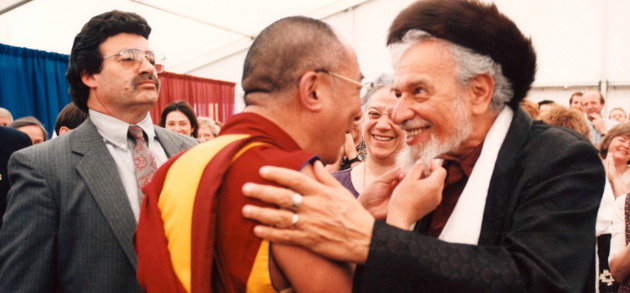
shapeimage_2Photo credit: “Reb Zalman greeting the Dalai Lama at the Naropa Institute” (Foto di Vita, 1997) – from The Yesod Foundation’s Reb Zalman Legacy Project

Interdependence has a number of things in its favor as a nominee for “most radical word.” For one, it is both a “wisdom” word (pointing to the nature of reality) and a “practice” word (directly indicating how we might actually see and live our lives). It’s also an inherently non-sectarian word, one which anyone can use. Most especially – as would befit a truly radical word – as we delve more and more deeply into it, it affects our relationship with everything. With:

our bodies and understanding of health
our minds, each other, animals, and the natural world
business and the economy
technology
all the institutions we create
the building of community
the communal/political process
situations of conflict and harm
other cultures
climate change and other urgent global challenges

Goldie – “Sea of Tears”

A 12 minute drum-n-bass symphonic masterpiece from the CD Timeless that I just listened to again for the first time in awhile.

Here’s a guide for those who’ve never heard it and might think they don’t have 12 minutes to spare. Maybe this will nudge you to make a bit of contemplative space in your day…

So if you click the play button below … you will first hear a purely electronic descending sequence of notes (F-C-F sharp) put through various effects, and have no idea where you are. It’s a mysterious, metallic landscape, a kind of limbo. (But that three note sequence will be shifting around within new contexts throughout the whole piece.) The guitar theme layered on top of this at 0:48 adds to the enigma, and if you are not patient (!) you might decide to hit Stop and find a cat video or something. But of course this would be a big mistake! BECAUSE …

At 1:36 the drums come in (this is d-n-b after all), and they play an unusual pattern of bars that alternate 4 beats, then 3, then 4, then 5. So now we are off… But where are we going?…

Suddenly at 2:48 the beats regularize into 4 as a jazzy, gorgeous theme on guitar enters: spacious and warm. Pure joy. This is the point, when I first heard it way back when, when I realized something quite amazing was taking place…

So we have nearly two minutes of this before just as suddenly the drums stop as a woman’s voice simply says “tears.” And we hear samples of breaking waves and seagulls crying in the distance joining the mix. Gradually, over the next half-minute or so, everything else fades out except for strings playing two notes, the voice repeating “tears,” and the sea and seagulls.

Then we are in another limbo, because at this point even the strings are gone, and we’re listening to sea and seagulls and nothing else. This is at 5:12, smack in the middle of the track: how cool is that? But then, over the continuing samples … the first voice we heard asks a question, and another voice, a child’s, replies:

“What are you doing here?”
“Washing away the tears.”

Thwack to the heart. And it always makes me think of the end of Allen Ginsberg’s poem for his friend Jack Kerouac too – “Memory Gardens”:

Well, while I’m here I’ll
do the work –
and what’s the Work?
To ease the pain of living.
Everything else, drunken
dumbshow.

But we are just halfway through! A new guitar line enters of simple plaintiveness. This is all we hear for a minute or so, the guitar over the sea and gulls. And at this point, another miraculous moment. At 6:34 the first voice reenters, saying “wash … away … the tears.” And a wordless vocal line enters too, and strings, with the previous guitar line returning. And then … the drums return, and there is a hint of crying in the mix, while the vocal line acquires words: “sea … of tears.”

But you know what? This track is still not out of new and beautiful ideas. Because at 7:48 we get yet another version of the initial three-note sequence – and the crying returns, and for nearly two minutes it’s almost unbearable…

Until 9:25 … and yet another guitar line, again simple, lovely. The crying now stops, and we just hear the guitar and three-note synth sequence, with drums and bass, a mysterious landscape akin to the opening. We float in this world until 11:00, when the drums stop again, for the last time, the previously crying woman says “sea … of … tears,” and then “wash … away … the tears … tears,” and then “wash … away … my tears.”

And the last 20 seconds are just the sound of the sea…

So – normally I wouldn’t want to try and do that kind of analysis here but I’ve always been in awe of how intricate and organically unfolding this piece is, and thought I would try to convey this in the hope that someone straying onto the site who might otherwise be dubious about the full potential of electronic/dance genres of music might be reminded that genius arises anywhere it likes…

The point, as always, is to listen for yourself. Which, since I will now shut up (!), you now can do.

magnificent speech by Glenn Greenwald on civil liberties

In my previous post I discussed certain unhealthy effects of our current highly politicized culture, and my own relationship to these. I ended by mentioning one particular question I do happen to be (somewhat) following, this being the progressive abridgement of the core civil liberties which are at the heart of the American enterprise.

In the embedded video below filmed at Brown University in 2011, Glenn Greenwald gives an exceptionally clear and eloquent presentation (using no notes!) of the subject. Here is a brief summary:

He begins by enumerating four features of our Bill of Rights often forgotten today:

1) It is meant to be understood in an absolute sense. Other aspects of our political system involve compromise, necessarily; but this was explicitly placed beyond that realm. To be a defender of the Bill of Rights is perforce to be a civil liberties “extremist,” as it were;

2) It was intentionally set up to be anti-democratic, to protect against the possibility of a “tyranny of the majority.” The example Greenwald gives is that of Fred Phelps. As he says, pretty much no one likes Fred Phelps, or at least what he has to say, but all the same that 99.9% majority is not allowed to curtail his self-expression;

3) It makes no distinction between wartime and peacetime, contrary to what is often asserted. Certain other aspects of the Constitution mention war powers, but the Bill of Rights is not so delimited. (Greenwald acknowledges that precise meanings of the enumerated rights are up for discussion – for example, what an “unreasonable” search and seizure is – but not their absolute status.);

4) It simply makes no distinction between citizen and non-citizen.

He goes on to make three points about why we should all care, and care deeply, about the health of the Bill of Rights, even if we think we are “the good guys” who could never be affected by current developments:

1) History makes very clear that abridgements of liberty, while they may begin as narrowly defined, inevitably broaden out to encompass larger groups of people;

2) More immediately, said abridgments create a climate of fear which over time ends up actually changing the culture. Greenwald gives several concrete examples of this: he speaks of how innumerable people have said or written to him that they support what Wikileaks does and would like to donate to it (freedom of association), but are afraid they might end up on a government list somewhere and so have refrained. Furthermore, that nearly all of the European members of Wikileaks he knows of have either already left the organization or are contemplating doing so, not because of fears related to their own governments but rather that the United States might find a way to bring them back one day, where they will have no guarantees of due process, might end up tortured, in a cage in solitary confinement for months or years without being convicted of anything at all – like Bradley Manning – or in permanent limbo in a place like Guantanamo.

The world today knows that the US – in tragically flagrant violation of the document that is its soul – asserts limitless power over anyone they simply claim to be somehow involved in “terrorism.” And this generalized climate of fear then creates a situation of increasing self-censorship, a degraded and very dangerous state of affairs.

3) Finally, I can do no better than simply to transcribe Greenwald here (I have emphasized certain points):

The last point I want to make about why civil liberty infringements are crucial to care about even if you’re not being directly targeted by them or if you think that the only people who are are people who deserve it, is that there’s one proposition that I think history demonstrates fairly conclusively – I would even say indisputably – which is that there really is no such thing as “legitimate certainty.” By which I mean that it’s always the case in every single society that there are certain opinions, certain propositions that are deemed to be unquestionably true, and then there are other propositions that are always deemed to be unquestionably false. And the ones that are deemed unquestionably false are the ones that you’re simply not permitted to express and that have traditionally been punished if they have been expressed.

And what always happens – not sometimes, not usually, not most of the time, what always happens to every society – is that certain opinions that they believe to be indisputably correct turn out to be completely erroneous, even evil. And certain opinions that they believe to be indisputably erroneous and pernicious turn out to be absolutely right. And nobody, as a result, should be so hubristic that they believe that certainty is warranted or legitimate when it comes to empowering the government: empowering the government to ban certain opinions, empowering the government to imprison certain people who just seem definitely guilty, without due process. This certainty is completely unwarranted by even a casual review of history. And that is ultimately what civil liberties are about, is preventing the government from exerting power without checks: checks that are necessary to prevent these kinds of errors.

So we accepted the idea that it was okay to put huge numbers of Muslims into cages without due process because even those of us who kind of thought it wasn’t the right thing to do deep down believed that these people were probably guilty, because where there’s smoke there’s fire. That we didn’t just pluck them off the street randomly, that they probably, if not being the kind of terrorist mastermind that they might have been accused of being, probably on some level were kind of guilty of something and therefore belong there. And it may be objectionable in theory, but not really passionately wrong that they were being imprisoned without due process. And yet as it turns out, the vast majority of them, people who spent time in Guantanamo, have turned out to be guilty of absolutely nothing. Colin Powell’s Chief of Staff Lawrence Wilkerson said that not only were the majority of them guilty of nothing but the Bush administration knew they were guilty of nothing but kept them there anyway to prevent the realization that they were imprisoning innocent people and to prevent people at Guantanamo from publicizing what had been done to them.

And ever since the Supreme Court in 2008 said that Guantanamo detainees have the right to habeas corpus review, the right to get into a court and ask a court to review the circumstances and validity of their detention, the Obama administration went in in each one of these cases and told the court, “we have overwhelming evidence that these people are terrorists and that they belong in Guantanamo.” The Obama administration announced, just like the Bush administration announced, that there’s no reason to worry about the lack of due process at Guantanamo – these are the worst of the worst. And yet when courts finally were allowed to review the actual so-called evidence against the people who were there, the evidence justifying the accusations, the courts found in 75% of the cases – that’s the current statistic – that there was no credible evidence to justify their detention. And many of them had been in prison for 5, 6, 7, and 8 years with what our own courts found were no credible evidence. And these are the people about whom the government was saying are the absolutely clearly, unquestionably guilty ones, the worst of the worst.

Certainty is not something that anybody should believe exists. That’s why all people, but especially people with power, and the more power the more this is true, need checks, need scrutiny, need accountability. And ultimately that’s what civil liberties are designed to do. So even if you think the government is acting correctly in a certain case and are therefore willing to acquiesce to the transgression of civil liberties, the mere fact that certainty is never warranted by itself ought to lead you to find that objectionable.

Greenwald went on to document how the Obama administration not only has not rolled back the civil liberties violations of the Bush administration but in certain respects has expanded them.

The remaining 45 minutes or so are a Q-and-A.

the tyranny of the political

I intentionally don’t engage in “politics” as such in this journal, at least in the more usual, narrow sense of that word. In part this is because I don’t follow the subject. I never look at newspapers, don’t own a TV, and try as best I can to bypass “news” as such online – for example by avoiding those day-to-day, minute-by-minute kinds of news sites as much as possible. In spite of this, such is the state of things that I always seem to know most of what is “going on.”

Many would say this is a good thing, but I’m not so sure. It seems to me that the practical inability to avoid all kinds of news, much of which is quite disturbing and most of which we are powerless to affect, does not make for a healthy environment in which to live our lives. An inherent bias towards negative news, reported negatively, certainly is an important part of this.

I submit that we humans don’t thrive very well in a climate drenched in the political. “Politics” should only ever have been a somewhat peripheral concern: the process of coming to communal decisions of various kinds. It’s everything else that is really the point of it all: the cultivation of health; the taming and training of mind; the expansion of the heart; the nurturing of others; the study of life and human culture; and creative expression of all kinds. Even the “communal decisions” I referred to oughtn’t to be different in kind from all other forms of personal relationship we maintain.

Today, however, the political seems to have swallowed up our culture. Not only has everything become politicized, but this has occurred within the context of extreme polarization and thus stagnation. When a realm of human experience gets politicized, it’s often the case that everything colorful and multi-dimensional and cool about it gets sucked out, its inner life papered over in predictable patterns of grey. Beyond this, I experience never-ending “news” as an attempt to draw my mind through a sieve leading to blinkered, tiny vision and a permanent state of agitation and panic.

So I prefer to engage with these kinds of “political” questions at one remove, by not following the unfolding of events day-by-day or even necessarily week-by-week but rather waiting until we have some kind of larger perspective on the more important of these. And even then, I choose to pay attention only to those “issues” which I can relate to deeper concerns of mine, ones which I feel capable of thinking through properly and communicating something about which hopefully has some kind of clarity.

One of these happens to be very much in the forefront at the present time: the question of civil liberties and their serious abridgement in the name of a seemingly never-ending “war.” A subject for the next post.